
Healthcare
Infection prevention and control designed for clinical and aged care environments where consistency, verification, and regulatory compliance are non-negotiable.
Oxylogix protocols support terminal cleaning, outbreak response, and routine environmental decontamination in alignment with NSQHS Standard 3 and Aged Care Quality Standard 4.
Why manual cleaning fails in
clinical environments
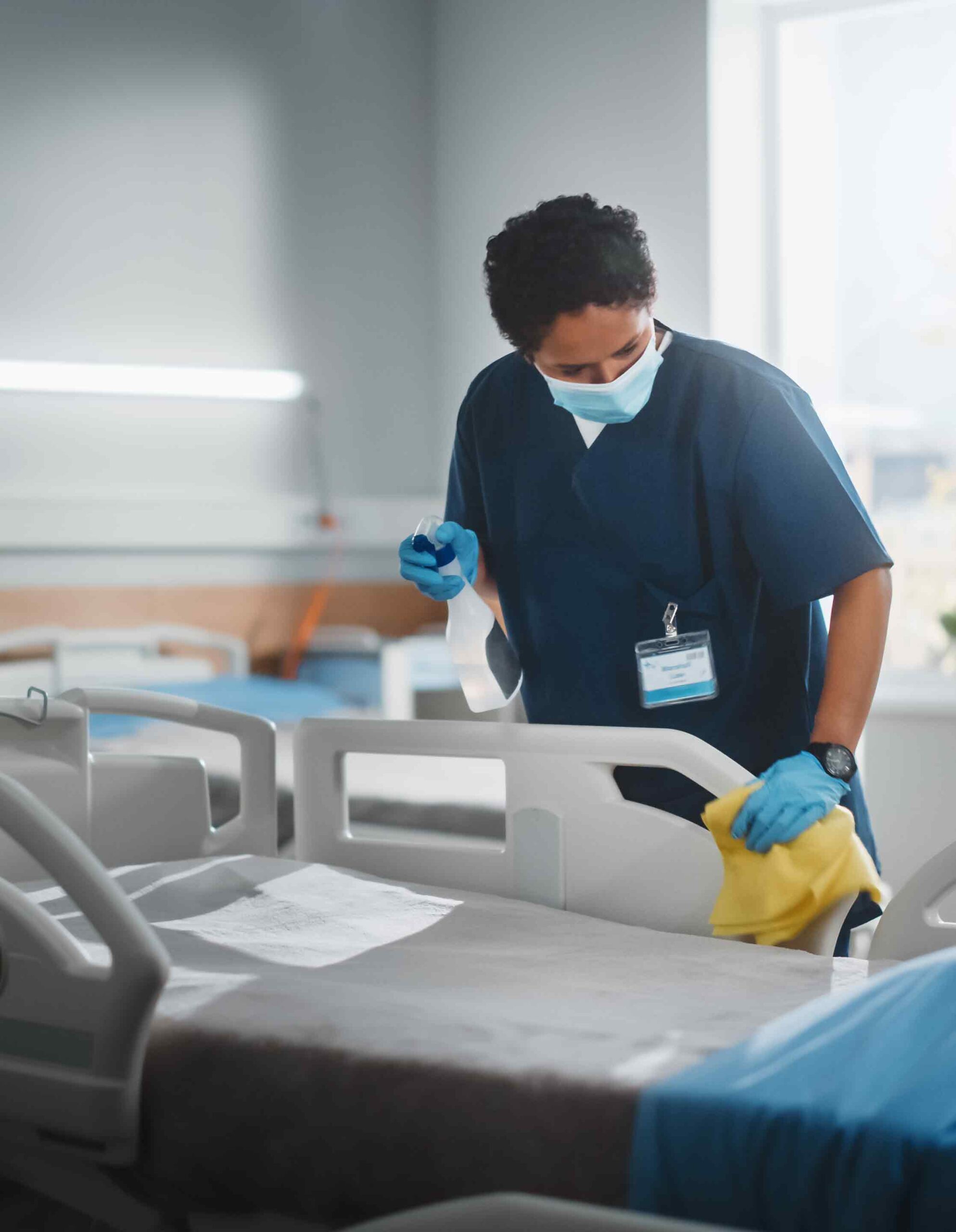
Traditional manual cleaning methods struggle to meet the demands of modern healthcare settings. High patient turnover, complex equipment, and time pressure introduce gaps that increase infection risk.
Why manual cleaning fails in clinical environments
Inconsistent application
Equipment damage
No verification data
Time and labour intensive
How controlled vapour works in clinical environments
Automated dry vapour biosecurity removes human variability from environmental
decontamination, delivering repeatable and verifiable outcomes.
01
Room preparation
The space is prepared and sealed. Sensors are positioned and a programmed protocol is selected. The system calculates required concentration and cycle duration based on room volume.
02
Controlled delivery
Dry hydrogen peroxide vapour is dispersed under controlled conditions to achieve uniform exposure throughout the space, including surfaces and voids inaccessible to manual cleaning.
03
Verification
Biological indicators and environmental monitoring confirm treatment effectiveness. Results are recorded to support audit trails and compliance reporting.
Key advantages in healthcare settings
Total environmental coverage
Vapour reaches all exposed surfaces, cracks, and hidden spaces across patient rooms, operating theatres, and equipment.
No infrastructure corrosion
Protects medical devices, HVAC systems, electronics, and clinical infrastructure from chemical degradation.
Standardised protocols
Repeatable processes across rooms and facilities remove operator variability from infection control.
Documented compliance
Verified results support NSQHS Standard 3 requirements and internal quality management systems.
Healthcare applications
Where Oxylogix protocols are deployed within clinical and aged care facilities.
Terminal room cleaning
Post-discharge decontamination of patient rooms and isolation areas. Supports reduction of healthcare-associated infections (HAIs) and Standard 3 compliance.
Outbreak response
Rapid environmental disinfection during norovirus, C. difficile, or MDRO outbreaks to support containment and continuity of care.
Operating theatre decontamination
Between-case and scheduled decontamination where manual cleaning cannot reliably access complex equipment and infrastructure.
Aged care facilities
Routine environmental hygiene supporting Aged Care Quality Standard 4 and reducing infection risk among vulnerable populations.
Regulatory alignment
For aged care providers, these protocols help meet Quality Standard 4 requirements by reducing infection risk through consistent, documented environmental hygiene.
This is not a replacement for existing IPC frameworks. It is a tool that makes environmental biosecurity more defensible and repeatable.
Regulatory alignment
At the same time, antimicrobial resistance continues to accelerate globally, reinforcing the need for proactive, system-level IPC strategies that go beyond manual cleaning alone.
Healthcare-associated infections remain a significant and ongoing burden. They contribute to poorer patient outcomes, longer lengths of stay, and increased pressure on already stretched resources.
Oxylogix protocols support a strategic approach to IPC by delivering consistent, verifiable environmental decontamination that aligns with regulatory expectations, without forcing trade-offs between speed, safety, and sustainability.
Understand how this fits your facility.
We work with infection control teams, facility managers, and quality managers to assess fit and implementation pathways.